


67 | Lament, Loss, and Hope in the Mourning | Emily Curtis
May 4, 2026
filed under

In this deeply moving episode, Ashley welcomes Emily Curtis—author, poet, and founder of Hope in the Mourning—to share her story of layered grief, enduring faith, and Gospel-centered hope. What unfolds is a sacred conversation about sorrow upon sorrow: multiple pregnancy losses and the death of her beloved father.
Emily invites listeners into the holy space of lament. Through poetry, Scripture, testimony, and raw honesty, this episode creates room for sorrow to be named, carried, and surrendered before a God who sees every tear and remains steadfastly good.
In this episode, we discussed:
- Navigating compound grief—when sorrow stacks upon sorrow
- Wrestling honestly with God when grief feels unfair or overwhelming
- Why lament is biblical (and how to lament, based on the pattern of the Psalms)
- Naming babies in Heaven and the healing power of honoring their lives
- What not to say to grieving parents and why Christian platitudes aren’t helpful
- The ministry and mission behind Hope in the Mourning
- Poetry as a form of lament, worship, and hope
This conversation is both tender and theologically rich, offering comfort to grieving mothers while equipping the Church to love better. Whether you are walking through miscarriage, compounded grief, or supporting someone who is, this episode offers language for pain, permission to lament, and hope rooted firmly in Christ.
Full transcript below.
MEET OUR GUEST

Emily Curtis is the compiler and poet for the book Hope in the Mourning: A Hope-filled Guide Through Grief. She is the founder and Executive Director of the non-profit ministry Hope in the Mourning and the host of the podcast by the same name.
She loves and follows the Lord, Jesus Christ, and loves to worship Him through music, poetry, and ministry to hurting people. She is the wife of a wonderful man and the mama to four children on earth and five in the arms of Jesus.

New episodes will be shared on the 1st of every month. Don’t miss a single episode…subscribe wherever you podcast!
Please also leave a review to help spread the message of hope with other grieving mommas!

MEET OUR HOST
Ashley Opliger is the Executive Director of Bridget’s Cradles, a nonprofit organization based in Wichita, Kansas that donates cradles to over 1,600 hospitals in all 50 states and comforts over 30,000 bereaved families a year.
Ashley is married to Matt and they have three children: Bridget (in Heaven), and two sons. She is a follower of Christ who desires to share the hope of Heaven with families grieving the loss of a baby.
Connect with Ashley:
Facebook /ashleyopliger
Instagram @ashleyopliger
Pinterest /ashleyopliger
www.ashleyopliger.com
Follow Bridget’s Cradles:
Facebook /bridgetscradles
Instagram @bridgetscradles
Pinterest /bridgetscradles
www.bridgetscradles.com
JOIN OUR FACEBOOK GROUP FOR GRIEVING MOMS

EPISODE TRANSCRIPT
Episode 67 | Lament, Loss, and Hope in the Mourning | Emily Curtis
Ashley Opliger: [00:00:00] You’re listening to the Cradled in Hope Podcast. I’m your host, Ashley Opliger. I’m a wife, mom, and follower of Christ who founded Bridget’s Cradles, a ministry in memory of my daughter, Bridget, who was stillborn at 24 weeks. Our nonprofit donates knit and crocheted cradles to hospitals in all fifty states to hold babies born into Heaven.
I’m also the author of the book Cradled in Hope, a biblical guide for moms grieving miscarriage, stillbirth, or infant loss. This podcast shares the same name—and the same heart—as the book: to help you find the comfort, compassion, and healing of Jesus in the midst of deep sorrow.
Rooted in the hope of the Gospel, this podcast is a sacred space for your broken heart to land. Here, we are going to trust God’s promise to heal our hearts, restore our joy, and use our grief for good. With faith in Jesus and eyes fixed on Heaven, we do not have to grieve without hope. We believe that Jesus cradles us in hope while He cradles our babies in Heaven.
Welcome to the Cradled in Hope Podcast.
Ashley Opliger: [00:01:03] Welcome back to the Cradled in Hope Podcast. Today I’m joined by Emily Curtis, who is the compiler and poet for the book Hope in the Mourning, a Hope-Filled Guide Through Grief. She is the founder and executive director of the nonprofit ministry, Hope in the Mourning, and the host of the podcast by the same name.
[00:01:20] She loves and follows the Lord Jesus Christ and loves to worship Him through music, poetry, and ministry to hurting people. She is the wife of a wonderful man and the momma to four children on earth and five in the arms of Jesus. Out of her own suffering, she has a heart to gather the stories of others and point grieving hearts to the steady hope of the Gospel.
[00:01:41] In today’s episode, Emily shares her story, grief upon grief, and invites us into a conversation about biblical lament, naming our babies, and what it means to trust God when life feels unbearably heavy. This is a tender, honest, and deeply hope-filled conversation, and I’m so grateful to share it with you. Let’s dive in now.
Ashley Opliger: [00:02:02] Welcome to the Cradled in Hope Podcast, Emily. It’s so good to have you.
Emily Curtis: [00:02:06] Thank you for having me.
Ashley Opliger: [00:02:07] Well, I had the privilege to be on your podcast, and that’s how we met. And after that interview, I quickly realized that you are one of my kind of people. We just really connected over theology and our love for the Lord, and also our stories of experiencing the loss of our babies, but also our dads.
[00:02:28] And you have just been through so much, but you’ve also championed and have a heart for sharing other people’s testimony of the pain and suffering that they’ve walked through, pointing people to the hope of the Gospel.
[00:02:40] And we’re going to talk about your amazing ministry, Hope in the Mourning, and the book that you wrote, and your podcast, and all of those things. But before we do, I would love for you to share your story first.
Emily Curtis: [00:02:51] Oh, thank you so much for having me on today. I’ll start briefly just saying that when I was four, my parents got divorced, and we moved from Indiana to California, which is where my mom’s parents were.
[00:03:03] And she raised myself, I was four, and my brother was seven, she raised us for about six-and-a-half years by herself. And she was a wonderful mom, but there was always that ache in my heart for a father. And even though we had contact with my dad, but he was very estranged, we only saw him about once a year for maybe a week or two per year, so he didn’t feel like a close dad.
[00:03:25] Anyway, fast forward to when I was 10. My mom got remarried, and he was the sweetest guy. I mean, we called him Dad right away and just fell in love with him right alongside her. And actually, I was my mom’s maid of honor, and my brother was my dad’s best man, which is pretty incredible. And he had asked us for permission to marry my mom, which was very special too.
[00:03:45] He knew we had a very closely knit family of just, even our little unit of three was just very closely knit. So they got married. He, at the time, was an interim pastor and the youth pastor at our church, and he just was everything that I had hoped for in a dad. He was very loving; he loved the Lord with all his heart, and so he really was intentional with how he guided us in our faith as well.
[00:04:08] So fast forward, I ended up getting married out in California. And my mom kind of set my husband and I up. And my dad actually cried at the wedding, because he was telling my husband, he said, “You’re getting a real gem, but it’s painful for me to give her up,” because we were moving away. So they were in California, and we moved to North Carolina.
[00:04:26] So we moved here and we had two beautiful babies, a boy and a girl. And then my mom had always said, “We’ll move to North Carolina when you have your third baby.” So when we found out we were pregnant with our third baby, we called my mom and said, “Surprise! What’s the moving arrangement? Now we want you to live here.”
[00:04:41] So they came and moved four minutes away from us, and we had that third baby. We then went on about a year-and-a-half to two years later, we had our first miscarriage. And that was a hard miscarriage because I’d never had a miscarriage before. And there really aren’t miscarriages in my family, so you just don’t expect that.
[00:05:01] I was not acquainted with what to expect during the miscarriage. But I just started bleeding one day, and I had noticed that I didn’t have the same symptoms with that pregnancy that I had with other babies, which was concerning to me. I actually get what’s called hyperemesis gravidarum, where I throw up like 20 times a day with my babies.
[00:05:19] And I wasn’t sick with that baby. And so I kept thinking in the back of my mind, like “Something could be wrong.” And then one day, I was in my bedroom, and my husband was in here, and I just started bleeding and said, “Something’s wrong. I know we’re losing the baby.”
[00:05:32] And so we called the doctor. I couldn’t even make it through that phone call. My husband had to take over and talk to them.
[00:05:39] So we go into the doctor’s office, and they could tell from the pregnancy test that I was pregnant. But then they go and look, and all they see is the sac. They can’t find the baby. But because of how high my levels were, they thought maybe it was ectopic. That ended up being a blighted ovum, which is its own, I’m sure you’ve dealt with that on this show as like it’s its own loss.
[00:05:59] And I actually had somebody say to me during that loss, “Well, at least you didn’t lose a real baby.” And it is a real baby. And actually, for people that don’t know what a blighted ovum is, it basically is a fertilized egg that dies before it implants and grows big enough to where you can see it on ultrasound.
[00:06:19] So as Christians, we very much still believe that is absolutely a life. We named that baby. The baby’s name was Hallel.
[00:06:26] And then we went on to have another beautiful baby girl. She was our rainbow baby. And after that, my husband and I really thought we were done. We had four kids. I get very sick when I’m pregnant. We were done.
[00:06:39] And I remember even being in the hospital and my husband just saying, “Are you sure that you want to sign these papers that say, “Have your tubes tied if it ends in a C-section?”
[00:06:47] And I remember telling him, “Yes.” Like, “I can’t go through another pregnancy. This is just too much.”
[00:06:53] Anyway, we had scheduled for him to have a vasectomy, actually, and on the morning of, he just could not go through with it. And he said, “I just feel I shouldn’t have that right to say that this is finite in our life.” And so we canceled it that morning.
[00:07:08] And a couple months later, we found out that we were pregnant, which was not on my Bingo card. I was not thinking we were going to have another one, but I think our youngest was actually at that time maybe three.
[00:07:18] And so you kind of start thinking like, “Okay, this was the Lord’s plan in this, because that’s why we didn’t go through with that, because the Lord wanted us to have this other baby.”
[00:07:27] Well, we lost that baby, and then we went on and lost another baby after that. And then fast forward to last year, and again, it was like I didn’t have the same symptoms with those two babies that I had miscarried as I did with my babies that ended up being live births.
[00:07:43] And so that becomes a hard thing, as when you’ve gone through a miscarriage, any subsequent pregnancies hold their own fear.
[00:07:49] And so anyway, in the summer I found out that I was expecting again and was very cautious about it, but did what I’m sure most of your listeners do and tested like crazy, because you want to see that line getting darker.
[00:08:01] And sure enough, the line was getting darker. I started getting very sick. I had three different ultrasounds, and everything looked good and healthy with this baby, and we were just praising the Lord! We were so excited to welcome this little baby.
[00:08:13] And my parents had gone to California for a donors’ event with Joni and Friends. And my dad had a really bad kidney pain, ended up going to the ER. And while he was at the ER, they said, “It’s not a kidney stone. You have pancreatic cancer, and it’s already metastasized.”
[00:08:30] And so I remember getting that phone call at midnight here and just crying. And here I’m pregnant with this baby, and so devastated because I love my dad. I want my dad to not only know this baby, but he was a mentor for my children in a very big way, especially my 11-year-old daughter.
[00:08:50] And it was one of those things that just takes your breath away. You’re just completely not expecting it. But my dad had said, “Can you please not tell the kids? Let me be the one to do that.”
[00:09:00] So we were planning on having a gender reveal party, and we decided, “Let’s go ahead and, on the day that you tell the kids, let’s make that the gender reveal day so we can have the grief, have the joy.”
[00:09:12] And so we did that. He sat down with my kids, and he told them that, “I have cancer. I’m not going to live very long.” And his biggest goal was to share the Gospel with them again.
[00:09:26] And we found out with the gender reveal that our baby was a boy, and we were so thrilled, because we were going to name him after my dad.
[00:09:33] And so fast forward just a couple weeks, I think it was like two weeks later, we go to the anatomy scan, and this is our 13 week scan. And my husband was out of town, and so my mom came with me. And my dad was going to come too, but he was too sick, he couldn’t come.
[00:09:51] So it was my daughter and my mom that came with me, and we go in the room. And at that point, we had decided we were going to name him Edison because we thought he’s like a light. He’s a bright light in a dark time. And so we wanted to name him Robert Edison and call him Edison.
[00:10:05] So we went into the room, and there was no heartbeat. And again, it was just this shattering moment of, I felt like, “Okay, the Lord is giving us this baby because now we’re going to walk through the pain of losing my dad.” And so to have that sorrow on top of knowing that my dad was also going to die was crushing.
[00:10:26] And I just remember being with my mom and my mom just sobbing, knowing that she was so looking forward to that baby, but now she was going to also face the loss of her husband on top of this loss. My mom and I are very close.
[00:10:41] But it was just one of those things that the Lord showed up in a big way though, because I had been with a different OBGYN, and we had made the decision just weeks prior to switch over to one of my close friends’ husbands.
[00:10:54] I had never thought that I wanted to have her husband do my OBGYN, right? That was like, “No, thank you.” But they are the sweetest couple. They go to our church.
[00:11:03] And my husband and I at the time, we were just saying, “We will likely lose my dad around the time that this baby is born”. And so we want someone that understands what our family’s walking through. We don’t want to have to explain it all. So we asked him if he would be our doctor.
[00:11:16] That was my first appointment with him, and there was no heartbeat. And he walks in there, and he scans again, and he just right then and there says, “Can I pray with you?” And, “Pray with us.”
[00:11:27] And even when we went to go have the D&C, he very graciously did another scan for us, because when there’s no heartbeat, they stop scanning fast. And so we didn’t get that profile picture. We didn’t get those pictures.
[00:11:42] And I told him, I said, “I know it sounds silly, but I need that. Okay? I just want to see his little profile.” And my husband wasn’t there, so my husband didn’t get to see that there was no heartbeat. And so by God’s grace, when we go in for the D&C, the doctor does the ultrasound, and it’s just this beautiful, perfect, perfect little profile.
[00:12:00] And so we got that picture and confirmed there was no heartbeat. But for me, one of the things that was so devastating was that I was too far along to miscarry at home because of the risk of bleeding, but I was one week shy of being able to deliver in the hospital.
[00:12:15] And as hard as labor and delivery is, I would’ve chosen that a million times because it just crushed me to think of him not being born intact. That really crushed my heart. And so again, with it being our friend, he was just so mindful of that.
[00:12:32] And then, on October 1st, we delivered James. We named him James instead, because of “Consider it all joy when you go through various trials,” [James 1:2-4 NASB] there was no other name that we could give him.
[00:12:43] And my dad’s name was Robert, and we named the baby James Robert, and my dad died 18 days later. But again, a grace of the Lord, my dad always wanted to be cremated, and because a friend delivered James, we were actually able to get James’ remains back. And so he wasn’t buried in some mass grave with all the other babies. He wasn’t disposed of. We got to have him back.
[00:13:07] And my husband and I got to have a private moment in our room where we got to see him. He had perfect tiny little feet with perfect little toes, perfect little hands. And my dad and James were actually cremated together, and so we have their ashes. And they’re together with the Lord, and that’s just their physical vessel, but there’s still a comfort in that.
[00:13:28] And I do feel too like because we faced the loss of James so close to the loss of my dad. I think that by God’s grace again, people understood a little bit more the depth of my grief.
[00:13:42] They probably would not have stepped in the same way if my dad hadn’t died at the same time. But I think when people see sorrow upon sorrow, they feel the weight of that grief even more than they would when you have a miscarriage.
[00:13:55] And those of us, I know most of your listeners have lost a baby or had a miscarriage, that, it’s a sorrow that I feel like you can’t fully know until you have been through it. It’s not a quick loss. It’s not something you ever fully get over. You love that child forever. You loved them the second that you found out you were pregnant.
[00:14:13] And so I thought the Lord gave us a lot of wonderful friends and sweet mercies along the way, but it was definitely one of those severe mercies to lose a baby, especially when you were looking forward to that being like the sunshine in your bleak winter.
[00:14:30] So yeah, that’s our story, our long version of it. But that’s my story. We actually went on, we had one more miscarriage after that as well, and that was an unexpected baby.
[00:14:42] And again, I feel like we try, and come up in our own minds with what we think God is doing. And we don’t know. God’s ways are so much higher than our own. And so with that last baby that we lost, it was unexpected. The baby was due right around my parents’ anniversary, and so I thought, “Oh, this is the Lord’s plan.”
[00:14:59] And so when we lost that baby too, it was really a hard struggle with the Lord, of wondering like, “What are You doing? Why would You allow this just to take this away?”
So yeah, I mean there, there’s definitely been wrestlings in there too, which I feel like they serve a purpose when we wrestle with the Lord. No loss of a child at any stage is an easy loss.
Ashley Opliger: [00:15:24] No. Emily, I’m just so sorry for everything you’ve walked through to have five sweet babies in Heaven with Jesus and your dad and the timing of everything, grief upon grief.
[00:15:34] And you alluded to it, you had a lot more support because you had grief on top of grief, but I’m sure it was also that much more crushing to you because it’s almost like all the grief is there.
[00:15:46] And it’s like, “How do you separate out the grief of losing a parent that you loved and that raised you and that you were so close with, and all the memories you have with him and all of the plans that you had, and not only in your relationship with him, but with your children, and then also to be grieving all the hopes and dreams that you had for your baby at the same time?”
Emily Curtis: [00:16:07] Yeah.
Ashley Opliger: [00:16:08] So, will you speak to navigating multiple griefs at once? Many of our listeners have walked through stillbirth or miscarriage, and they may have experienced it multiple times, so they’re experiencing grief on top of grief in that way.
But it’s very possible, just like you and I have experienced other kinds of loss and grief, that they may be experiencing multiple things. And it’s so overwhelming and almost drowning to be in the midst of this and something else. So, can you speak to how you navigated both at the same time?
Emily Curtis: [00:16:41] Yeah. You know what? It was interesting because it really was such a whirlwind. Every year, we do a beach trip, and so we had a beach trip planned. And both of our families, my husband’s and my family, are both super close, like best friends. And so we vacationed together, both sides of our family.
[00:16:57] And so we had this beach trip planned, and my dad was going to go. We knew it was probably going to be one of his last trips. My husband and I actually drove, the morning after my D&C, we drove to the beach to be with the family. And so there was not really…
[00:17:12] It was hard. You’re healing from the miscarriage there, and yet there’s this grief, my dad was very weak, obviously very sick. And so I really was trying not to draw any attention to my own grief with the loss of the baby.
[00:17:26] And I think that they truly do have good intentions when they say things, but sometimes, and this is the reason why we did Hope in the Mourning, is because sometimes, Christians especially I think, are guilty of saying things that come off flippant. It comes off like there’s just not that depth of compassion.
[00:17:43] And so when you say something like, “But we’re so glad that baby James is in Heaven,” yes we are, but that’s not the right thing to say to me when I show up after a D&C, because I wasn’t happy that baby James was in Heaven. That’s not where my heart was. I was grieving him.
[00:17:58] And anyway, I would say navigating all of those at once, that was a hard thing. And honestly, I mean, I’m still navigating that. We’re only a year out, and so those are still hard things.
[00:18:11] And I think with my mom, I just went into protection mode of my mom because she was losing her husband, and that was something that, like I said, my mom and I are best friends, and so my first thought was, “Make her pain as less as possible,” like to be there, provide everything she needed, make it so she didn’t need to do things.
[00:18:31] My dad, toward the end, required full-time care. He was on hospice care in his own home, and he had to have pain medication every two hours, and he was no longer cognizant at that point. And so we spent the night at their house for weeks.
[00:18:45] And actually my in-laws did too. And my mother-in-law, my father-in-law, and my husband and I, we took rotations giving my dad his medications every two hours while he was unconscious, so that my mom wouldn’t have to do that, so she could sleep, because we knew she was exhausted enough just from grief.
[00:19:01] And that is one of those things too, is that being exhausted from grief is such a real thing. And there are times when I think it’s okay for people to say no to other people coming over, even to comfort them.
[00:19:15] And for those that are looking to comfort other people: Don’t take offense at that. If people say, “No, I’m not up for company today,” or, “I’d rather you leave the meal on my porch,” think about their needs above your own. Don’t think that they need to thank you or that there needs to be … Don’t have an expectation, I should say, because none of us know how we’re going to react to grief and be so different from day to day.
[00:19:42] And so I would say from the compound grief, it was just every aspect was different. I feel like we went into kind of a shock with my dad. With James, when I came home, literally the best word I can use to describe it is just shattered. I came home and just locked myself in my room and cried and cried.
[00:20:00] And with Kina, which was our last baby that we lost, I was really angry. I guess I wrestled with the goodness of God and the kindness of God because I felt … I had told my husband at the time, I said, “This feels mean,” because there were so many things on top of each other.
[00:20:16] But again, that is why it’s so important. It’s important who you marry and it’s important who you surround yourself with. Because my husband, in that moment, he was grieving too. And at this point with Kina, we hadn’t lost that baby yet. It had a strong heartbeat, but it wasn’t growing. And so our doctor, who was our friend still, he had told us, he said, “I’d be remiss if I didn’t tell you that I think this will end in a miscarriage.”
[00:20:40] And so here I am pregnant. I haven’t told anybody because I didn’t want to put grief on anybody else in this season. At this point, my dad had died in October, and we found out we were expecting this baby the last week of November, and we lost that baby in January. So we hadn’t told anybody. It was just my husband and I that knew, and obviously our friend, the doctor.
[00:20:59] And so my husband, in the car he just said, “We have to focus on what we know is true. We know that God never changes. We know that He is good and that He only does good.”
[00:21:08] And I needed that. I needed him to be what I call the Aaron to my Moses, because sometimes you can’t lift your hands up in prayer and in praise without somebody else supporting you and somebody else saying, “This is what we’re going to do,” in good times and in hard times.
Ashley Opliger: [00:21:27] And reminding you of those truths and putting that up, because a lot of times we can only see our circumstances and we can’t see-
Emily Curtis: [00:21:35] Absolutely.
Ashley Opliger: [00:21:35] … God’s good nature. Because just like you said, a lot of times when we walk through painful things, especially the loss of our babies, we just think, “This feels so mean and cruel, and how could a good God allow this to happen to us?”
[00:21:50] And so having that reminder of, “No, He is good. He grieves over this. He’s broken over the brokenness of this world, and He didn’t do anything to cause this. In fact, He came to save us from this brokenness and from death,” I’m so grateful you have such an amazing husband to remind you of that truth.
[00:22:08] And also just sounds like incredible family, both your family and his family. And I love that they are so supportive of each other and helped your dad in his final days, and it’s just a really beautiful picture of a family and such love to serve him in that way until he went to Heaven.
Emily Curtis: [00:22:26] Yeah. Yeah. They were very supportive, and we’re a very close family, which I’m very thankful for.
Ashley Opliger: [00:22:32] Yeah,
Ashley Opliger: [00:22:33] We hope you’re finding encouragement in this episode so far. We want to take a moment to share some resources our ministry offers to support grieving moms like you.
On our website, bridgetscradles.com, you’ll learn more about our nonprofit and find many hope-filled resources, including free e-books to help you plan a memorial or funeral service for your baby, meaningful ways to honor your baby in your heart and home, and gentle guidance for navigating difficult days like due dates, Heaven Days, and holidays.
We invite you to join our community of grieving moms through our Christ-centered support groups, offered both in-person at our headquarters near Wichita, Kansas, and virtually through Hope Online. These gatherings provide a place to find comfort, connection, and biblical hope alongside other moms who understand your pain.
You can view upcoming dates and sign up on our website. While you’re there, we’d also be honored for you to share your baby’s story with us.
For ongoing support, we welcome you to join our private Cradled in Hope Facebook group—a safe space for grieving moms to find friendship and walk their healing journey together.
To stay connected with us and receive faith-filled encouragement, follow us on Facebook and Instagram at @bridgetscradles, @cradledinhope, and my personal page @ashleyopliger.
Now, let’s get back to the episode.
Ashley Opliger: [00:23:54] Well, you shared, as you were sharing your story, your babies’ names. And I know we talked about this on your podcast, but just in case any of our listeners haven’t listened to that episode, I would love to ask you to share each of their names and the reason behind their name, because they all have a biblical name.
[00:24:11] But I also just wanted to say to our listeners, I have walked with so many grieving moms in our support groups that have chosen to name their baby that was miscarried and so many that have not.
[00:24:25] And there is no judgment here whether you have chosen to do so or not. But at the same time, I want to just offer that even if you haven’t named your baby yet, it’s still okay. You still have permission to do so even weeks, months, years later.
[00:24:43] And I have walked with several mommas who, they didn’t name their baby right at the moment, but then did so later, years later. And it was so healing for them and validating to say, “My baby has a name.”
[00:24:57] And I shared this on your podcast about the mom who had multiple babies in Heaven, and that she didn’t know the gender for each baby. And so she chose to name each baby the birth flower of the month that they were born into Heaven. And so I just loved that, and I have seen such healing come from that.
[00:25:17] And so I just want to tell you, if you’re listening and you are thinking, “I’ve lost a baby very early, we didn’t know the gender,” there’s a lot of different ways that you can do it.
[00:25:27] I’ve heard moms say they’ll do the birth month or they’ll do like a gender-neutral name that could be for a boy or a girl. Or sometimes I’ve heard many moms say the Holy Spirit has just given them what they believe is the baby, you know, that the baby was a boy or a girl, and so they’ll choose a name based on that.
[00:25:43] And obviously, they won’t know until they get to Heaven, and it will be a sweet surprise, but I think seeking the Holy Spirit in choosing a name is a very good way to go about it. So Emily, will you share your story in naming your babies?
Emily Curtis: [00:25:58] Absolutely. And I agree with you, I think that there’s a real peace, for me at least, that came from naming them because to me, it signified their worth, that they’re unique. They’re one of a kind. There never were and never will be again that child.
[00:26:14] So our first baby that we lost, the one I told you was the blighted ovum, we named that baby Hallel. And all of our children have Hebrew names. My husband is a seminary student and we love the meaning behind them.
[00:26:27] And so Hallel means to praise; Hallelujah is what it means. And so we just had determined that we were going to praise the Lord when He gives us healthy children, and praise the Lord when He takes the children that He’s allowed us to conceive.
[00:26:39] The next baby was Selah, and that means to pause. And so we thought, “We want to take a break. We want to pause and praise the Lord and reflect and just be thankful for the children that we do have.” And then I love that we hear Selah in church because we’ll be reading that, I just love hearing that name.
[00:26:57] The next one was Zayin. So it’s not Zion, but it’s Zayin. It’s Z-A-Y-I-N, and that is the Hebrew word for seven, and that would’ve been our seventh baby.
[00:27:08] And then we had James, and that’s James Robert, and James was the only one that we knew definitively his gender.
[00:27:14] And then Kina, and Kina means to lament. And I told my husband when we lost that baby, I said, “I need something heavier for this baby because this just feels heavy. I need something that means like to mourn, to lament, to cry out.” And we searched and that was the right fit for that baby.
Ashley Opliger: [00:27:33] Yes. And I think it’s such an important thing to say that lament is biblical, and it is grieving with hope and taking our sorrow to God. Just as in the Psalms, as David cried out, we bring our pain to Him instead of running away from Him.
Emily Curtis: [00:27:50] Yeah.
Ashley Opliger: [00:27:50] And so lament is really a beautiful thing, even though it is a heavy word and it brings up the connotation of sadness and sorrow.
[00:27:58] The way I see it is this is us bringing our pain and sadness over the brokenness of this world and of sin and death, and bringing that to the foot of the cross and saying. “God, this is heavy. This is sad. I wish this wasn’t part of my story, but I’m going to bring this to You.”
[00:28:17] And in fact, I am sharing this with my church at a women’s event, and it’s about lament and ordering our lament in the right way. And so I use Psalm 13 as an example, and these are David’s words. And I talk about the pattern of lament and that the Psalms really give us that pattern and structure of how we are to lament.
[00:28:39] And so I have it broken down into four words, complaint, petition, remembrance and trust, and praise. And so if we look at Psalm 13 as the example, the complaint is, “How long, oh Lord? Will You forget me forever? How long will You hide Your face from me? How long must I take counsel in my soul and have sorrow in my heart all the day?”
[00:29:02] And then the second one is petition. So petition would be: What are we asking of the Lord? So the first one was complaint, that’s telling Him the brokenness and the sadness that we’re feeling. But then petition is: What are we asking of the Lord?
[00:29:16] David says, in verse three, “Consider and answer me, oh Lord my God. Light up my eyes lest I sleep the sleep of death.”
[00:29:22] And the third part of the pattern of lament is remembrance and trust. And so in verse five, he says, “But I have trusted in Your steadfast love. My heart shall rejoice in Your salvation.” And so that’s remembering who God is in our lament, and trusting that He is good and that He cares for us.
[00:29:40] And then the last part is praise. So verse six, David says, “I will sing to the Lord because He has dealt bountifully with me.”
[00:29:47] And so that is the pattern of lament: complaint petition, remember and trust, and praise. And I just wanted to share that because I think sometimes when you hear lament, people have this idea that it’s something we shouldn’t be doing, but it is so biblical to lament.
[00:30:05] In fact, the Psalms have laid it out for us on how we should do that, and the Book of Lamentations. And it’s so important because I think that is part of our process as believers is to take that pain to God, because if we don’t direct it toward Him, we will turn our back on Him.
Emily Curtis: [00:30:22] I completely agree with you. And actually. I think that people confuse that with complaining or whining. That’s what they think that lament is. Or they think that it is staying in this stupor of depression. But that’s not what it is.
[00:30:38] It’s exactly what you said. It’s an outpouring of our hearts before the Lord, knowing that the way that this world is not how it was intended to be, and our souls grieve that. And so the one place that we can take that to is the Lord.
[00:30:51] And even going back to what you had talked about before as far as how I dealt with sorrow upon sorrow, honestly, one of the most comforting things to me was when I just realized Jesus sees it all.
[00:31:03] Jesus knows every heartache that I have. I don’t have to come up with the words. I can just cry, and the Lord knows exactly what each of those tears means. He knows my heart. And actually there’s a song, I can never pronounce her last name, but there’s a song by a woman, I think her name is Stephanie, and it’s called No One Ever Cared For Me Like Jesus.
[00:31:23] And I love that song, and that song was so precious to me during that season because that’s how it felt. And it wasn’t for lack of other people stepping in to care for you, but nobody is going to bring comfort to your grieving soul like Jesus can. And He wants to see it all, we don’t have to hide our pain from Him.
[00:31:42] That’s what lament is, to bring our sorrows before Him and everything that’s broken and say, “I trust You with this. I have no idea how I’m going to survive this, but I trust that I will because of You.”
Ashley Opliger: [00:31:55] Absolutely. I love that you brought up the song because that will transition perfectly to talk about your book, because I love the structure and the format of your book.
Emily Curtis: [00:32:05] The book is called Hope in the Mourning, a Hope-Filled Guide Through Grief. This is a compilation of many others’ stories and testimonies through different kinds of grief.
[00:32:15] And what I love about it is the format, how each person, it’s written by multiple people, different authors within it, they get to share their story. And then at the end, they have some pictures of their loved one or something that represents the trial that they walk through.
[00:32:32] And then at the end, you have the Hope and Helps, and you have Scripture. Each person that was writing gave Scripture, they gave helpful ways that people ministered to them, things that you should not say to someone in that similar circumstance. And then you had some hymns and songs that comforted them, and then the hope that Jesus has given them through that loss.
[00:32:56] And I love that you actually had the sheet music for some of the hymns in the book, and I just love how throughout this book each person has their own unique insight into different kinds of grief and how the Lord walked them through it.
[00:33:12] And then throughout the book also are your poems, because you’re a poet. And I would love for you to read one of your poems for us on this podcast. But before you do that, would you just share about this book and your heart behind it and how it got started? And then read something from it
Emily Curtis: [00:33:29] Yeah. This book took me about three years to make, and honestly, I used to have a business that was like a gift-giving service for grieving people, but it was an actual business. But so many people kept bringing me their stories.
[00:33:44] They would DM me, and sorrow after sorrow. But so many people would confide in me and say hurtful things that had been said to them, and many of them were said to them within the walls of their own church. And it was unintentional, but it’s because people wanted to stick this Band-Aid on there and say, “All better. I said, ‘I’m praying for you’, and I texted you that verse, I’ve done my duty.”
[00:34:05] And I realized that not only do people need to hear the testimonies of the hope that these people had, because several of these stories they’ve gone through unimaginable losses. I mean things that we all think, “Man, I could never go through that.”
[00:34:21] Well, they thought that too. Nobody ever thinks, “I can go through a trial. Bring it on.” No one ever thinks that, but their faith never wavered. In all of the people, there are 21 stories in here, all of the people that I asked to write their stories, I asked them because I had observed them for years walk through their suffering, and saw how their love for the Lord actually increased. Their faith increased. Their joy was not snatched from them.
[00:34:48] And that’s an important thing, is for people to understand that we can grieve and still have joy. We don’t grieve as those who have no hope, as 1 Thessalonians tells us. And so our grief looks different.
[00:34:57] So the intention behind our book and our ministry actually as a whole is threefold. We want to encourage the people that are grieving.
[00:35:05] So when people read their stories, when people read the hymns and the Scripture and the poetry, my hope is that they feel emboldened to go for the Lord, to trust Him, and to just say, “You know what? If the Lord saw them through that, surely He will see me through this as well.” And we tried to have a very diverse amount of topics in here so that people would connect to something in here.
[00:35:28] And then the second thing that we wanted to do is we really want to equip the Church. That’s why we have the Hopes and Helps sections, because essentially, we all end up being counselors. Right?
[00:35:39] You all have that friend or that family member that ends up having a miscarriage or a stillborn, and you have to know how to give a timely word, as Proverbs says. We want to be able to give a timely word.
[00:35:50] And so by reading these stories, it works almost like a cheat sheet. You can go in and you can say, “I’m going to find the story of that person that faced chronic illness, and I’m going to see what was helpful to her. Okay, here are some things I can do. I’m going to read what are some things I should not say to her, and I’m going to try to avoid those,” because although everyone’s suffering is different, there are some things that are just fairly universal.
[00:36:12] I learned one of the worst things you can say to people that are grieving is, “Let me know if you need anything.” It’s one of the worst things, and we’ve all done it. All of us have done that.
[00:36:20] And one of the other things, which I’m sure that you have heard this even after your loss of Bridget, is, “You’re so strong. I could never go through that.” That’s not a comforting thing because it’s not our strength. Right? We feel incredibly weak when we’re going through those sorrows, but Christ is gracious to sustain us in our weakness and give us His strength for our weakness.
[00:36:39] The poetry in here, some of them were inspired by the people whose stories you’ll read in here, and some of them are just inspired by my own relationship with the Lord, but really they’re poems of lament.
[00:36:50] It’s exactly what you had just mentioned, where it takes you through the sorrow, but by the time you get through the end of the poem, you’re reminded of who Christ is and the fact that we have this firm foundation and this steady anchor of hope.
Ashley Opliger: [00:37:05] I love it so much, and yes, I agree with what you said about so many well-intended, whether they’re Christians or not. I think really, people in general will say the wrong thing or not say anything at all. And it’s a struggle with grief; there’s so many people that just don’t know how to enter in, don’t know how to minister and just have their presence be just …
[00:37:30] A lot of people don’t understand the ministry of presence and what that looks like in grief. I think most people are very uncomfortable sitting in that, and so I love that you have very practical ideas and testimonies from people that have lived through various pain points in their life that are speaking into that.
[00:37:50] And I love how you said it’s kind of like a guide for people to look and say, “Here’s some things that I could say or shouldn’t say or could do to help them in their grief.” I think that’s a very needed resource for the Church and for many people that want to love better and want to support people better, but they may not know how.
[00:38:10] And a lot of times, I mean, I think you would probably say this as well, it’s like until you face something really hard in your life, it’s like that opens the door for your understanding of how to be more compassionate and loving and supportive to other people.
[00:38:27] And I would say that was true for me when I lost Bridget, that it really opened my eyes to see how to love people and to comfort people through grief, but then even a whole nother level with my dad. And I had already been in the grief space for a decade at that point.
[00:38:43] But I think I started to see how other people love me really well and showed up in very specific ways, and I was really impressed with, “Wow, I’ve never thought of how someone might do this or show up in this way.”
[00:38:58] But likewise also in the lack of support for the long suffering, like we talked about on your podcast, because a lot of times there might be that initial wave of support and the text messages, maybe dropping off a meal, that kind of thing. But then it’s pretty quick to just kind of wean off over time, and eventually there’s not really that many people checking in on you.
[00:39:18] And to your point about how when people say, “Oh, you’re so strong,” first of all, it’s not our strength, it’s the Lord’s. But also, they might see you and think that you’re strong because they saw you show up at church, or in my case, they see me continuing to lead a ministry or get on a podcast or whatever.
[00:39:37] But it’s like, “You’re not seeing my weakness. You’re not seeing that I’m still crying on the floor.” And so I think that’s really misleading too. It’s like I’m not as strong as you think I am.
Emily Curtis: [00:39:47] Yeah, and I think sometimes it unintentionally puts pressure on the grieving person to put on this facade that they are strong, that they need to somehow pull themselves up by the bootstraps and get over their loss.
[00:39:59] And that’s not how we want to be as believers because we want to be the hands and feet of Christ. We want to be Christ-like, and that involves long suffering. That involves intentionality. And we’re not good at that, especially in our hurry-up, overcrowded-schedule type of life that we live here in America.
[00:40:18] We’re not good at slowing down, and people are even worse at saying, “Let me slow down with the intention to enter your grief.” They don’t want to do that. Entering grief is, it’s hard, it’s tiring, but that’s what love is. Right?
[00:40:32] And in John, it tells us that they’ll know that we belong to Jesus, that we are His disciples, by the way we love each other. And that’s a big point of this ministry, is that we want to be good examples to the world of what it looks like for Christians to love and serve one another on our hardest days.
Ashley Opliger: [00:40:50] Absolutely. And another thing, when people say, “Oh, you’re so strong,” it’s almost saying, “I see that you’re so strong, so you don’t need me, or you don’t need extra support.”
[00:41:01] And then I’ll use myself as an example. I’m historically the strong one. I’m the leader, and so I think there’s sometimes this misconception of, “She’s the strong one. She has it all together. She’s okay.” And there’s a lot of times I’m not okay.
[00:41:17] And so it’s like, actually you need to check on the strong ones even more because sometimes they’re the least supported because other people just assume they don’t need support.
[00:41:27] But let’s go back to this idea of lament, and you have a poem that you wrote about lament in Hope in the Mourning. Would you share that with us?
Emily Curtis: [00:41:37] Yeah. A lot of the poems in this book are structured very much like the Psalms. So this poem is called Soul, and I actually wrote it after a junior high friend of mine lost her baby in a car accident, and my soul felt overwhelmed and heavy.
[00:41:52] And so it’s called Soul and it says:
Oh, soul, are you weighed down with sorrow?
Does grief seem your nearest of kin?
Are you anxiously viewing tomorrow
with a heart that is aching within?
Oh soul, do you feel the weight of this world
as it moans under sin’s dreaded curse?
Do you long for the day when He’ll make all things new,
exchanging beauty for all that now hurts?
There is a day coming where all things will be
beautiful, glorious, bright,
where, to eyes now darkened and filling with tears,
He will unveil His unfathomable light.
Oh dear precious soul,
remember the truth that will not waver nor wane,
that the Lord is your God. He will redeem all your days.
And what is lost here on Earth will be Heaven to gain.
So yea though you walk through the shadowy valley
and your heart will be tempted to fear,
Remember, a shadow can only be cast
when the sun is drawing near.
Take courage, oh soul, and cling to the sun
when it seems only darkness surrounds.
Hold fast to His promises, finding them true,
and you’ll find it’s His grace that abounds.
Ashley Opliger: [00:43:03] So, so beautiful.
Emily Curtis: [00:43:05] Thank you.
Ashley Opliger: [00:43:05] I told you this on your podcast, but you have such a gift.
Emily Curtis: [00:43:08] Thank you.
Ashley Opliger: [00:43:09] It’s a gift with words and not just beautiful words strung together in a beautiful way, but the hope that you’re pointing to in Jesus through your words. So thank you for sharing that. And I would love for you to share now about your heart behind the ministry.
[00:43:25] You also have a ministry by the same name, Hope in the Mourning, and a podcast by the same name. And so would you share a little bit more about the ministry and how our listeners could be served by your ministry or could possibly serve the ministry, get involved?
Emily Curtis: [00:43:25] Yeah. We’re about eight months old right now, and the Lord has been so gracious to not only give us a radio program that’s local to here in North Carolina, which a very unique aspect of that is that our program goes into the local prisons here, which is a huge advantage to be able to share the Gospel and the hope of these stories.
[00:44:00] And so we share all different types of testimonies. We talk about the loss of children, the loss of spouses, the loss of health. We talk about depression, anxiety, all of these things. One of the things that’s really unique about our ministry is we actually have ministry pastors as well. We have nine men that are pastors in our ministry, and they talk regularly on our program as well.
[00:44:23] We tackle some of the theological questions that we’re all thinking, but maybe we don’t ask. Maybe we feel ashamed to ask things like, “Why do good people suffer?” Or, “Is Jesus punishing me?” Those things.
[00:44:35] But with our ministry, we not only have a way for people to donate financially, because one of the things that our ministry does is we share on the podcast these testimonies of trials turned into hope, but we also give gifts of hope.
[00:44:52] We have several gifts that we give out monthly to all different types of grievers all across the country. And currently, we can give out about three or four gifts a month, but we try and meet the tangible needs, so not only giving them gifts of comfort, but also checks sometimes, so that they can help bury their loved ones.
[00:45:09] Some people couldn’t afford a headstone, and we try and help them with that. Or they have loved ones that they want to fly out for the funeral, and they need help with that, and so having that.
[00:45:18] Also, having people that are willing to pray with people, that’s a big part of our ministry, is we just launched a section called The Lighthouse. And that is our section where it’s the long suffering hand of our ministry, where we will call you, we’ll talk to you on the phone, we’ll pray with you, and then we’ll call you next month and we’ll talk to you on the phone, and we’ll pray with you and help direct you to local churches, help direct you to the biblical counselors in your area.
[00:45:47] And that’s our hope is that people feel seen and loved by the Lord, not by us. We just want to be the hands and feet of Him.
[00:45:55] So they can find us at hopeinthemourning.org. And that’s Mourning, M-O-U-R-N-I-N-G, and they can read our story of the month.
[00:46:04] If you have listeners that want to submit their own testimony, they can come to our website and submit their story, and they can do a written version of their story as well.
[00:46:12] And so we do a written story every month. We do a podcast weekly, and the radio broadcast is also weekly, and then the book. So the Lord has grown this into something that we never saw coming, but we’re so thankful to be entrusted with it.
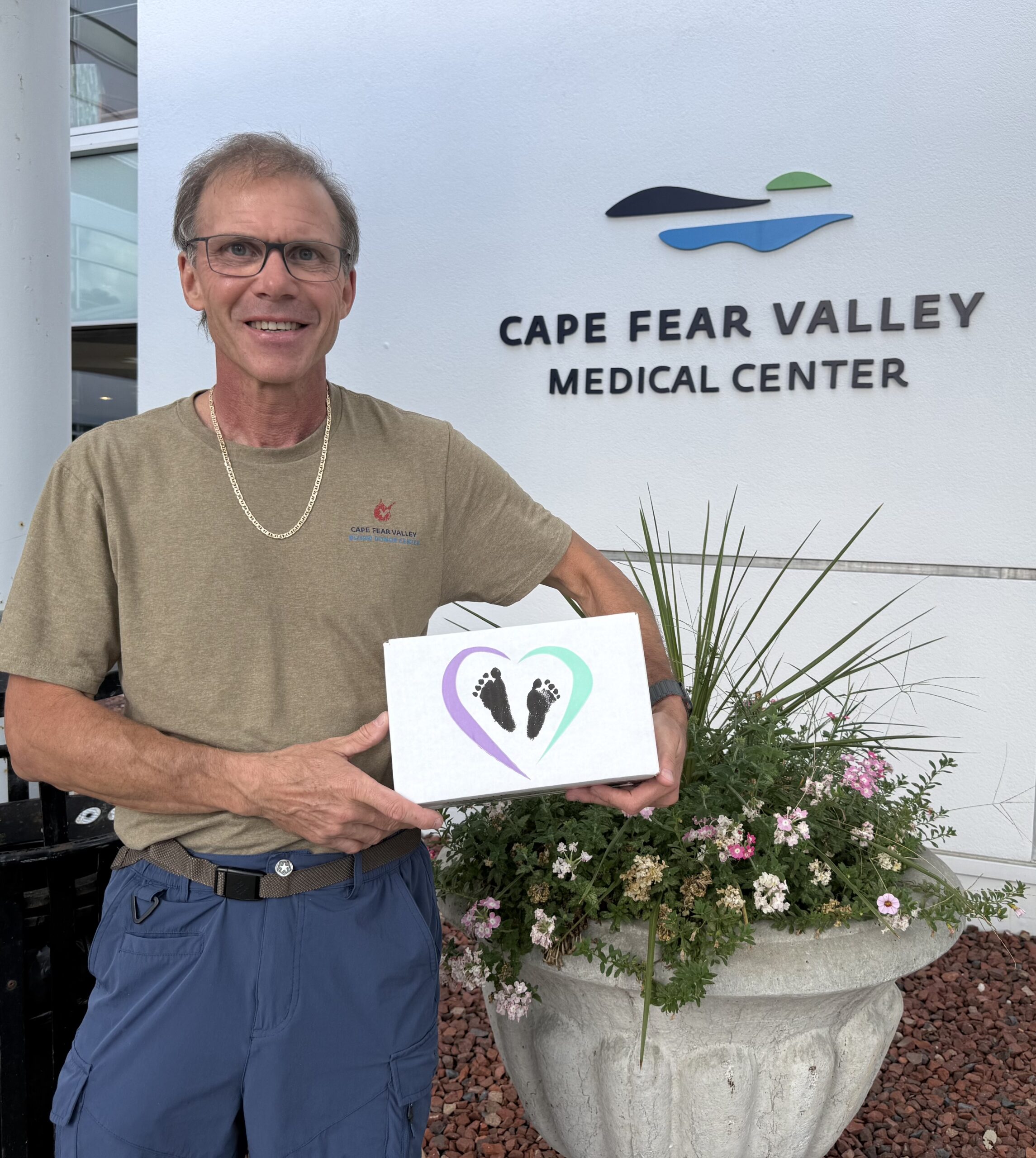
Ashley Opliger: [00:46:26] It’s amazing and so beautiful, and we’re so grateful for everything you do. And we just sent Bridget’s Cradles memory keepsakes to you to include in your boxes, and I know you have copies of my book. So thank you so much for sharing and partnering with our ministry in this way, and we want to continue to support what you’re doing.
[00:46:43] I would just love for you to close us in prayer, and I know you have one other poem that you would love to share as part of that prayer.
Emily Curtis: [00:46:50] Yeah, I’m going to share this last poem for your listeners, and this is one that I wrote after the loss of James Robert and Kina. And then I’ll close this in prayer. It’s called In His Keeping.
I have a secret sorrow
deep within my soul
for I have loved a little one
that no one else will ever know.
I was the only home that held your frame
as you were woven in the secret place,
and only Jesus knew your name.
Though never held against my chest
while I hummed a lullaby.
I offered countless prayers for you
in the stillness of the night.
My heart will always wonder why
your heart could not keep beating,
and it will always bring a sober thought
that each precious life is fleeting.
So with open hands that longed for you,
I’ll raise them through my weeping
and in my sorrow offer praise
for you are in His keeping.
Father, we just thank You for this time that You’ve allowed us to come together to realize really what a gift it is to lament, to be able to take our sorrows to You, to the One that brings us comfort.
Lord, I thank You that You are a high priest that is not far removed from our suffering, that You brought Yourself low so that You would be acquainted with all of our ways, all of our sufferings, and that You made atonement for that, so that we could be reconciled with You, so that the consequences of sin will forever be gone, that we have Heaven to look forward to.
Lord, I pray for the momma that’s listening to this whose heart is shattered right now, missing their little one, that You would give them comfort. Give them a peace that only You can.
Lord, this is the hope that we have. We have the hope that You have overcome the world, that we will have suffering in this world, but You’ve overcome it. Lord, You have created a way for us to be reconciled to You.
So I pray that You would use us as Your hands and feet to comfort one another, to love one another, and to remind each other that You are good and You are faithful, despite our circumstances, at all times. Amen.
Ashley Opliger: [00:48:46] Amen. Thank you so much, Emily. It was a joy to have you on today.
Emily Curtis: [00:48:50] Yeah, I really appreciate you having me.
Ashley Opliger: [00:48:54] Thank you for listening to the Cradled in Hope Podcast. We pray that you found hope and healing in today’s episode.
Don’t forget to subscribe so you don’t miss new episodes when they release each month. You can also find this episode’s show notes and a full transcript on our website at bridgetscradles.com/podcast.
Be sure to sign up for our email list on our website, so that we can keep you updated on upcoming podcast episodes, support groups, and other hope-filled resources.
You can also purchase my book, Cradled in Hope, wherever books are sold. It’s a biblical guide for grieving moms to find hope after miscarriage, stillbirth, or infant loss. Written from the depths of my own heartbreak, I share vulnerably about losing my daughter, Bridget, and how God met me in my grief. Through Scripture, theology, and soul-deep reflections, Cradled in Hope offers biblical wisdom, practical guidance, and the eternal hope of seeing your baby again in Heaven through faith in Jesus.
To accompany the book, I’ve also created the Cradled in Hope Guided Journal—a beautiful companion that includes space to write your responses to the discussion questions, full Scripture passages from each chapter, and additional reflection pages and guided charts to help you process your grief and draw you closer to Jesus. You can download the free digital version on my author website at AshleyOpliger.com/Journal, or order the printed version on Amazon if you prefer to write by hand.
Are you looking for ways to use your grief for good? Visit our website to learn how you can volunteer or donate to Bridget’s Cradles in memory of a baby in Heaven.
Do you want a quick way to make an eternal impact? Share this episode with a friend or leave a review on Apple Podcasts to help more grieving moms find the same comfort you’ve received here.
Thank you so much for listening and sharing. Until next time, we will be praying for you. And remember, as Jesus cradles our babies in Heaven, He cradles us in hope. Though we grieve, we do not grieve without hope.
I have a fancy professional bio here, but what is most important for you to know is that my first and only daughter, Bridget, went to Heaven and Jesus was the only One who could put the shattered pieces of my heart back together. Maybe your heart is broken too?
If so, I'm here to be your friend and walk with you on your grief journey. More importantly, I'm here to point you to Jesus, the only One who can heal your heart and promise you eternity with your baby in Heaven. Hold my hand, friend, and let's start this journey together.
I'm a grieving mom who found comfort in Christ.
Welcome, I'm so GlaD You're Here







Spotify
Apple
Ways To Listen
Hosted by Ashley Opliger, this podcast offers Christ-centered comfort to moms grieving the loss of a baby in Heaven. Each episode is rooted in Scripture and points your heart to the truth of the Gospel, the presence of Jesus, and the eternal hope of being reunited with your baby in Heaven.
Listen to Our Podcast
welcome to cradled in hope


Donate Online
Make an eternal impact. Your donation comforts grieving families with cradles, support, and the hope of Christ.

Find a Community
You don’t have to walk this road alone. Join a Christ-centered community of moms who understand your grief.

Read the Book
Discover comfort, hope, and biblical encouragement in Cradled in Hope, written by Ashley Opliger for grieving mothers after baby loss.


Christ-Centered Comfort and Guidance for Grieving Families
Honor your baby’s memory with kindness. Explore 50 thoughtful ideas—plus a free customizable RAK card to share their legacy of love.
Random ACts of Kindness in Memory of a Baby in Heaven
Find meaningful ways to honor your baby on birthdays, due dates, and holidays—offering remembrance through cherished traditions.
Honoring Your baby on Milestones and Holidays
Offer support to a grieving parent with practical ways to help and 12 heartfelt gift ideas designed to bring comfort during deep loss.
Supporting a Loved One After the loss of a baby


Navigate life after loss with gentle guidance for grieving, healing, and finding hope in the midst of heartbreak.
Grieving and Healing After the Loss of a Baby


